Pillows


Choosing The Right Pillow
How much attention do we pay to our pillows, it is really surprising how much you use your pillows. The last time you bought a pillow how much research did you really do, did you finally decide based on quality, a luxury filling or just the price, you won’t be that surprised when you learn to find you are not alone and most people buy a pillow based on the price. Good sleep is based on lots of deciding factors that all must come in alignment at the right time, just like your head, neck and spine, if they are not aligned right you will suffer from pains and aches all of your life. If this is your nightmare, lie back and have a good think about what might be causing all these issues. Right there all along is your pillow, we spend fortunes on the right mattress and duvets but most of us overlook the humble pillow for what it really is.
If you are using a tired old pillow, continuously scrunching it every night trying to get the perfect position, it is time for it to go! A good pillow shouldn’t make you restless, it should provide the right support all night long without any aches or pains. If your neck and shoulders don’t get sufficient support, or are propped at an angle that causes twisting, craning, or crunching, this puts your spine and body out of alignment, leading to strain and discomfort in your neck, shoulders and back, as well as sleeplessness. As with your mattress, comfort and support are both important in selecting the right pillow. The best pillow for you is one that feels comfortable to rest your head on and supports your head, neck and shoulders and matches with your mattress.

So how long should a pillow really last? It takes a lot more punishment than your mattress and they say change that every 8 years on average. Natural filling such as goose down and feather and & down will last approximately twice as long as a good quality synthetic fibre as you can revitalise the filing by just giving them a good shake. The luxury microfibre pillows, those that have loose fibres like Comforel, act in the same way and can last as long as 3 years without any issues. Some manufacturers say that their pillows come with a 10 year guarantee but if your pillow is over 5 years old it cannot be reliably giving you the same level of support as it would if it were new. This may seem like a relatively short life span but if you think about it your pillow is used for up to 8 hours a night every day for 5 years, almost over 43000 hours in total.
Take some time to check out the state of them, is the case stained from sweat or torn and misshaped. Sometimes they can have odours emanating from them due to dead skin cells, mildew, mould, fungus and dust mites (as well as their faeces). Believe it or not over time, as much as half the weight of a pillow can be attributed to these unwelcome organisms, is it any wonder that more and more of us have allergies these days. If your pillow passes the sight and smell test, it’s time to do the fold test. Fold your pillow in half, if it just stays folded in half and doesn’t move it is time for the bin. A good pillow should retain its shape almost immediately depending on the level of filling. With a Natural fill such as goose down, you can do this over your arm. If it just droops down and hangs there over your extended arm its literally goosed and at the end of its usefulness. Synthetic microfibre pillows should have instant bounce back, if not buy another as they are doing you no favours or support.
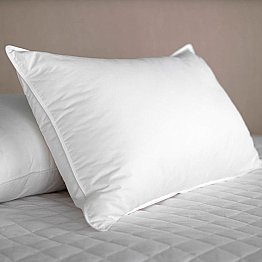
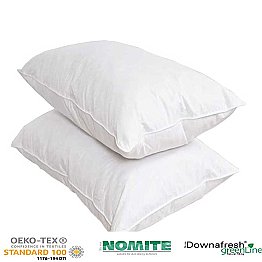
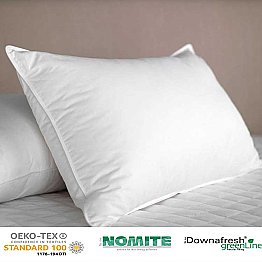
So how do I go about choosing the right pillow for me I hear you ask? This is a very individual process, unfortunately there is no one option fits all scenario. If money was no object, we would all go for the most expensive goose down option right? Well, no as you might be the wrong type of sleeper for a softer style of pillow, down pillows are very soft and light and offer very good support for back sleepers. Most of our pillows are now suitable for allergy suffers due to the NOMITE and Downasan certification, they are also the best when it come to hot night sweats as the down filling is highly breathable and dissipates heat very quickly. Always go for the highest fill power rating when choosing a down pillow, then you can be reassured of the best quality and comfort every night.

Feather and down pillows are normally associated with cost as they are a lot cheaper to buy than the more expensive down fills but if you are a side sleeper or you prefer a thinner yet firmer pillow this could be the ideal option for you. The feathers are denser so they do not separate as quickly, so they offer greater support if you need your neck and spine to be aligned when you are on your side. Feather fills are also now suitable for allergy suffers as they have the same accreditation as down pillows. Synthetic fills are now so technologically advanced they can supersede their natural counterparts, no longer just the cheaper alternative they are fast becoming the pillow of choice for many people. They come in a soft, medium and firm comfort level and due to the fibre now acting like pure down they offer the same level of comfort and luxury.
Have you thought about a British Wool pillow? They are becoming more and more popular here in the UK, they wick away moisture from your head and neck and can be effective at helping regulate your temperature during sleep. They are warm in the winter and cool in the summer months. Wool pillows tend to be pretty firm but they do outlast any other form of filling. If you require a softer wool pillow try one of the luxury alpaca wool fills as they are best you can currently buy.
So now we have got to the bottom of the filling question, how about you? How are you sleeping? Position is key to choosing the right option, do you sleep on your side, on your stomach, on your back or like me you are not sure as you seem to end up in any position. Side sleepers need a firmer pillow due to the distance between the shoulders and the side of the head. A soft pillow would just give up and let the head droop down which may in turn lead to upper back pain or neck and shoulder issues. If you are a stomach sleeper opt for a soft pillow as there is not much distance between the nape of your neck and the mattress and a nice down pillow would feel like sleeping on a cloud gently caressing your head and neck. In this position try a pillow underneath you for extra support as most people lift one of their legs for support which can put strain on your lower back. Now back sleepers really need a pillow that is flatter as there is minimum distance between the back and the mattress, this is time for a good quality down pillow which will transform your sleep.
Don’t ignore your pillow! It’s such an important element of your sleeping environment and having the right one under your head can make for more comfortable and restful nights.